





















Key Takeaways
- Mega cap stocks associated with tech and AI are down meaningfully since the end of May.
- Capital has rotated to other segments of the equity market, rather than a risk-off move to cash or bonds.
- While the tab to build out Capex is taking a toll on short-term returns, we think the AI-driven bull market has healthy fundamentals and more room to run.
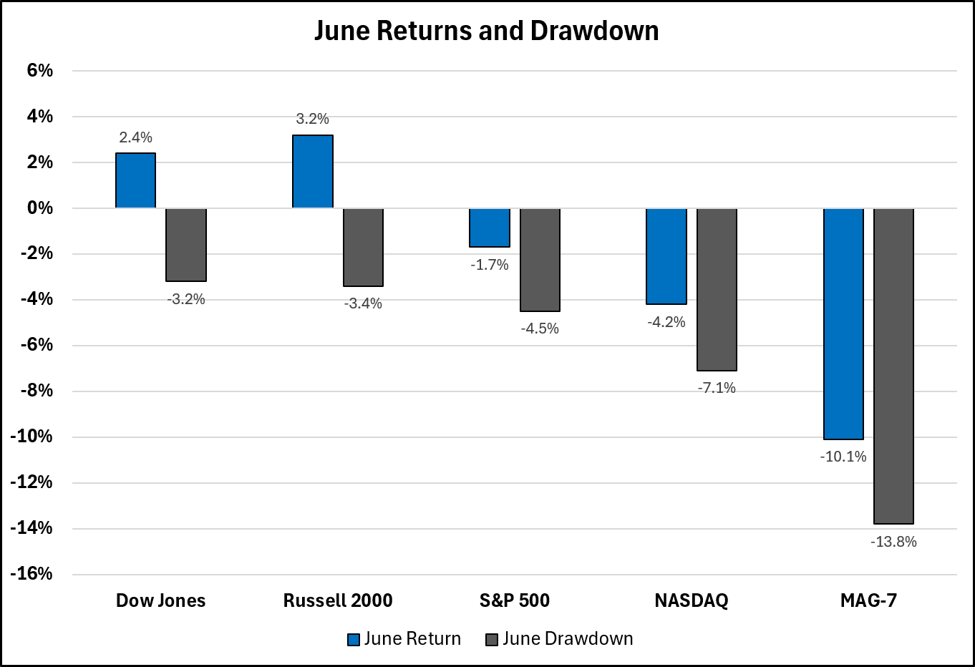
Tech stocks have hit a rough patch recently, with the NASDAQ Composite down approximately -7% since the end of May. June was particularly volatile, as the index fell -4%, while mega-cap technology stocks, AI hyperscalers, and the "Magnificent Seven" collectively declined close to -10%.
Source: FactSet
The pullback has sparked questions about the sustainability of AI-driven growth, rising infrastructure costs, and elevated valuations.
What Prompted the Pullback?
Part of the explanation is simple: investors took profits. Several market leaders have generated exceptional returns over the past year, with many doubling in value. After such strong gains, some consolidation is not surprising.
At the same time, investors have become increasingly focused on the scale of AI-related capital spending. Recent financing activity by companies such as Meta, Microsoft, Alphabet, and Amazon underscores the enormous investment required to build next-generation AI infrastructure.
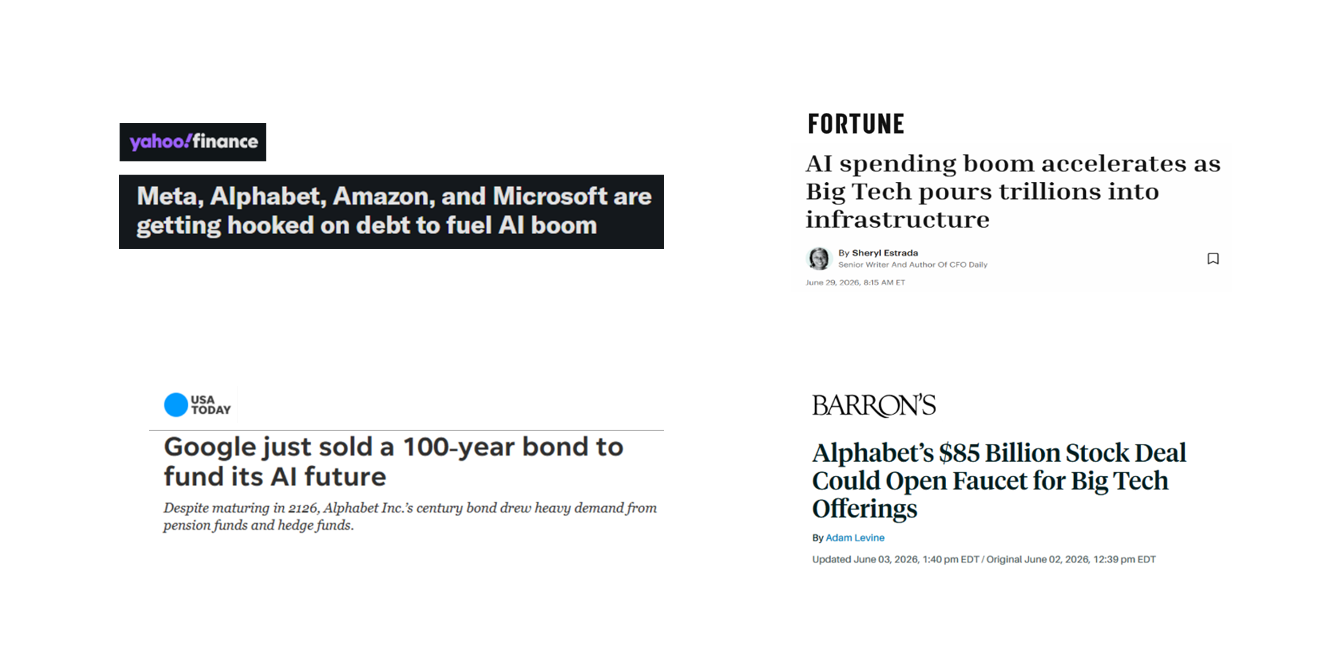
While Wall Street has embraced the AI opportunity, expectations have risen alongside spending. Following a strong first quarter earnings season, investors are increasingly focused on whether today's market leaders can maintain their pace of growth while continuing to fund massive infrastructure projects.
Despite coming from a position of exceptional financial strength, capex is starting to take a toll on profitability. Recent examples include Tesla and Alphabet which reported negative free cash flow in Q2, exceeding -$1 billion and -$5 billion respectively. Both stocks sold off meaningfully last week. Could other mega cap tech names be headed toward a similar trajectory?
Economically speaking, conditions remain supportive. Inflation cooled in June, and the outlook for monetary policy appears relatively stable through the back half of the year. We believe Fed Chair Kevin Warsh is likely to keep interest rates unchanged through year-end given persistent inflation and a balanced labor market.
Where Did the Money Go?
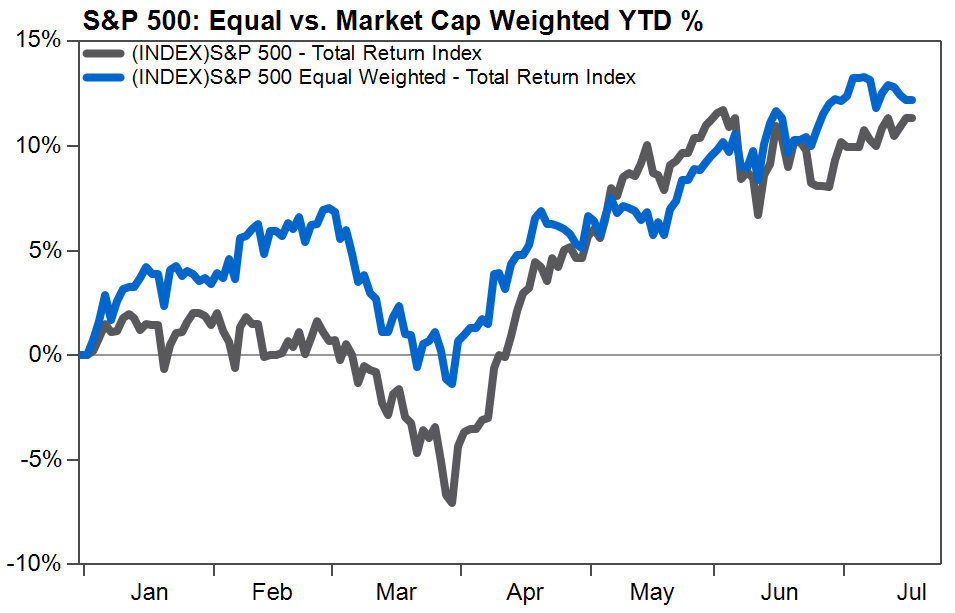
Despite the tech selloff, investors did not flee equities. Instead, capital rotated into other areas of the market. Small caps, value stocks, emerging markets, and more traditional sectors have all benefited. Small caps have been particularly noteworthy, with the Russell 2000 outperforming the NASDAQ by nearly 1,000 basis points in 2026. Through mid-year, small caps were up 21%, their strongest first-half performance in more than three decades.
Source: FactSet
Valuations also remain compelling. Small caps trade at roughly 16x forward earnings, compared to approximately 24x for the NASDAQ. Just two months ago, large-cap technology stocks were trading closer to 30x earnings.
Value stocks and emerging markets have also delivered strong results, with value well ahead of growth year to date and emerging markets gaining 21%. Once again, diversification has rewarded investors.
Does Tech Have More Room to Run? We Think So.
We continue to believe the technology sector and broader bull market have room to advance because the AI investment cycle remains in its early stages.
Much like the internet buildout of the 1990s, the benefits are expanding beyond the companies most directly involved. Early winners of the current cycle have been concentrated among chipmakers and hyperscalers. Today, however, demand is spreading to companies tied to fiber optics, power infrastructure, cooling systems, data center construction, specialized real estate, and other supporting industries.
In other words, the AI story extends far beyond semiconductor companies. Growing IPO activity, including high-profile offerings such as SpaceX, Anthropic, and OpenAI, further highlights the expanding bull market.
Most importantly, investment spending continues to accelerate. Hyperscalers alone could exceed $1 trillion in capital expenditures by 2027 . If that trend persists, the companies supplying AI infrastructure should continue to benefit, supporting both the technology sector and the broader market over the long term.
At some point, Wall Street will want to see meaningful returns on these investments, perhaps sooner rather than later. In the meantime, however, the massive wave of AI-related capital spending should continue to drive the mega theme forward, even if there are a few bumps along the way.