





















For much of the last sixteen years, investors had little reason to think deeply about bonds.
Stocks consistently outperformed. Interest rates hovered near historic lows. Passive investing encouraged everyone to view fixed income as little more than portfolio ballast, useful, boring, and mostly an afterthought. Bonds still had a job, of course. Correlations were generally low, and there were moments, like the dot-com bust and the Global Financial Crisis, when bonds reminded everyone why they were invited to the party.
Then rates started rising in 2021.
Stock and bond correlations picked up right into the wreckage of 2022, the year bonds were supposed to steady the ship and instead helped drag it down. Since then, correlations have remained elevated, reaching levels not seen since the late 1990s.
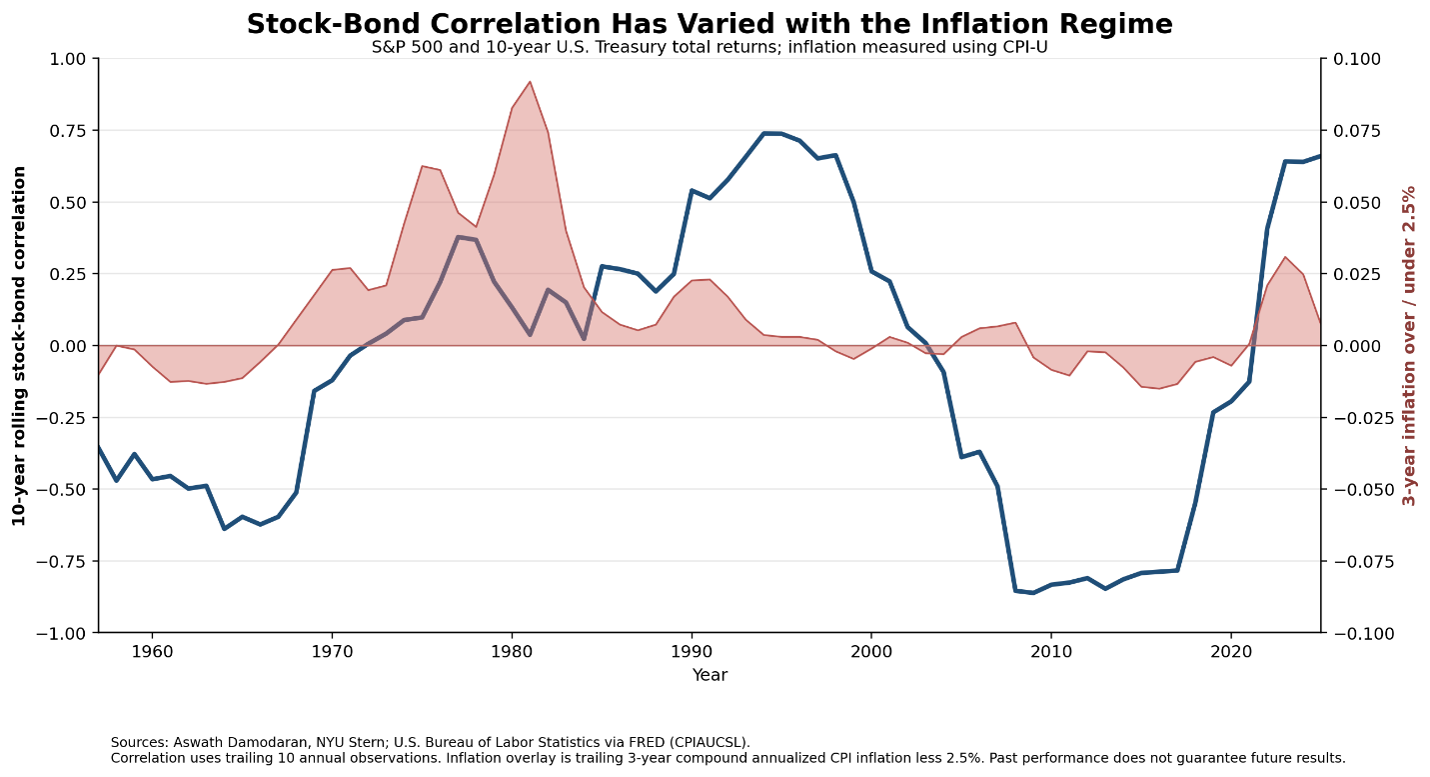
That has eroded trust in the traditional stock/bond diversification story.
It is easy to forget that stock and bond correlation has never been a law of nature. It has historically been inconsistent; we just got used to the uncorrelated version. As Phil Toews notes in The Behavioral Portfolio, bonds often add stability, but their effectiveness depends on variables like valuations, interest rates, inflation, and the fact that corporate stocks and corporate bonds ultimately rely on the same companies. In 2022, investors got a very clear reminder that bonds can sometimes increase portfolio losses rather than offset them.