





















Fixed income investors have received a wake-up call in recent months. After spending much of the summer near 4.2%, the 10-year Treasury yield recently climbed above 5.25%, its highest level in more than 20 years. The sharp move likely reflects a combination of growing federal debt, the Fed's September rate hike, persistent inflation pressures, and stronger-than-expected economic growth.
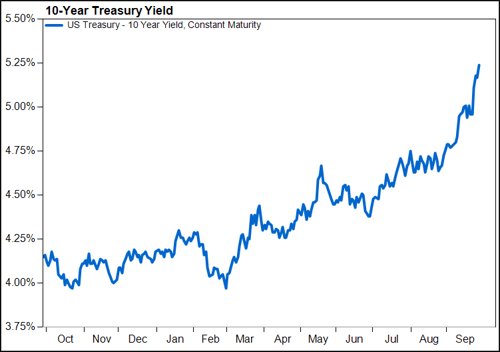
Source: FactSet
These developments have understandably raised concerns about whether higher rates could pressure risk assets or the economy. Perhaps no quote captures the bond market's influence better than James Carville's famous observation from the 1990s:
“I used to think that if there was reincarnation, I wanted to come back as the President or the Pope or as a .400 baseball hitter. But now I would like to come back as the bond market. You can intimidate everybody.”

- James Carville, Political Advisor to the Clinton Administration
The quote remains relevant today. Treasury yields influence mortgage rates, consumer borrowing costs, corporate financing, and even stock valuations. When bond markets move sharply, investors across all asset classes pay attention.
While higher yields can create short-term volatility, they may also present one of the most attractive opportunities for conservative investors in years.
Not All Yield Increases Are Created Equal
The reasons behind rising yields matter. While concerns over inflation, deficits, and Treasury issuance have dominated headlines, part of the recent increase appears tied to stronger economic growth (one example is August PMI, displayed below) and higher real interest rates.
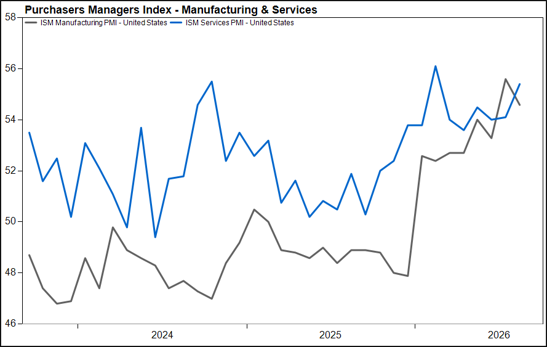
PMI readings above 50 indicate economic expansion
Source: FactSet
Some observers have also noted that elevated capital spending demands from both governments and private companies, including investments in AI infrastructure, may be contributing to upward pressure on rates.
A Silver Lining: Higher Yields Improve Future Bond Return Potential
Although rising yields can temporarily hurt bond prices, they also improve future return prospects.
Historically, starting yield has been one of the best predictors of future bond returns. Based on yield levels available in September 2026, JPMorgan estimates that broad investment-grade bonds could generate roughly 5% annualized returns over the next five years.
For conservative investors, this marks a significant change from much of the post-financial-crisis period, when high-quality bonds often yielded just 1% to 3%. Today's bond market offers more income, stronger return potential, and improved ability to preserve purchasing power over time
What About Other Asset Classes?
Higher yields can create valuation headwinds for stocks by increasing the discount rate applied to future earnings. However, when rates rise alongside economic growth, equities have often proven resilient.
Explore what rising rates and yields mean for equities in Nolan Mauk’s latest blog.
Gold may face pressure from higher real yields, while international equities may face downward pressure, should overseas companies re-direct capital to dollar denominated assets.
Real assets and alternatives may encounter higher financing costs but can still benefit from a constructive economic backdrop. Fixed income-like alternatives may be a bit less compelling if traditional high-quality bonds offer similar yields and a higher degree of safety.
Importantly, higher yields do not automatically signal trouble for risk assets. Instead, they tend to increase the importance of diversification and thoughtful asset allocation.
The Bottom Line
The recent rise in Treasury yields has created short-term uncertainty, but it has also restored something investors lacked for much of the last decade: meaningful income.
While higher rates can pressure certain asset classes, they have also improved the outlook for high-quality fixed income. For long-term investors, today's yield environment may represent one of the best opportunities in years to earn attractive returns from conservative investments while maintaining a balanced approach to risk assets.